Directional Boring

Why Choose Temple Construction
Temple Construction has completed thousands of directional bore installations across Colorado, operating our own fleet of boring machines that covers every project scale, and our experienced crews know how to navigate the Front Range's unpredictable subsurface conditions better than anyone.
The Temple Difference
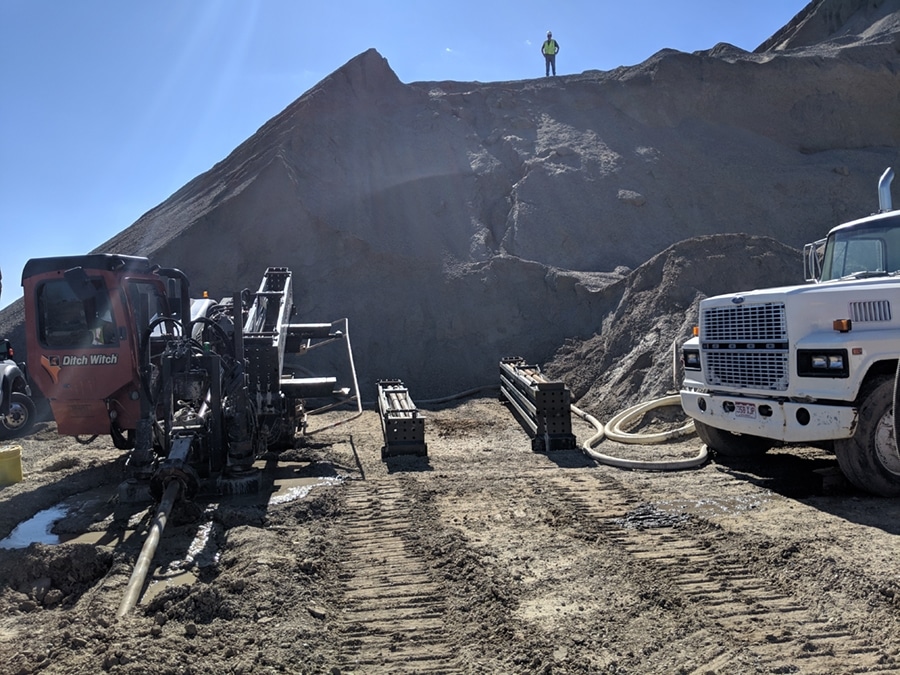
- Diverse Equipment Fleet: Our boring machines are capable of handling pipe diameters from ¾” to 36″, so whether the job is a small conduit crossing or a utility main, we have the right rig on-site.
- Decades of Field Experience: Our crews have decades of hands-on directional boring experience across Colorado’s varied terrain, from compacted urban soils to rocky mountain ground.
- No Subcontractors: We own our equipment and employ our crews directly, which means no scheduling gaps, no hand-offs, and full accountability from start to finish.
- Cost-Competitive Approach: In many cases, directional boring is less expensive than open excavation once you account for road cutting, traffic control, shoring, backfill, and repaving. We’ll help you understand exactly where boring saves money on your project.
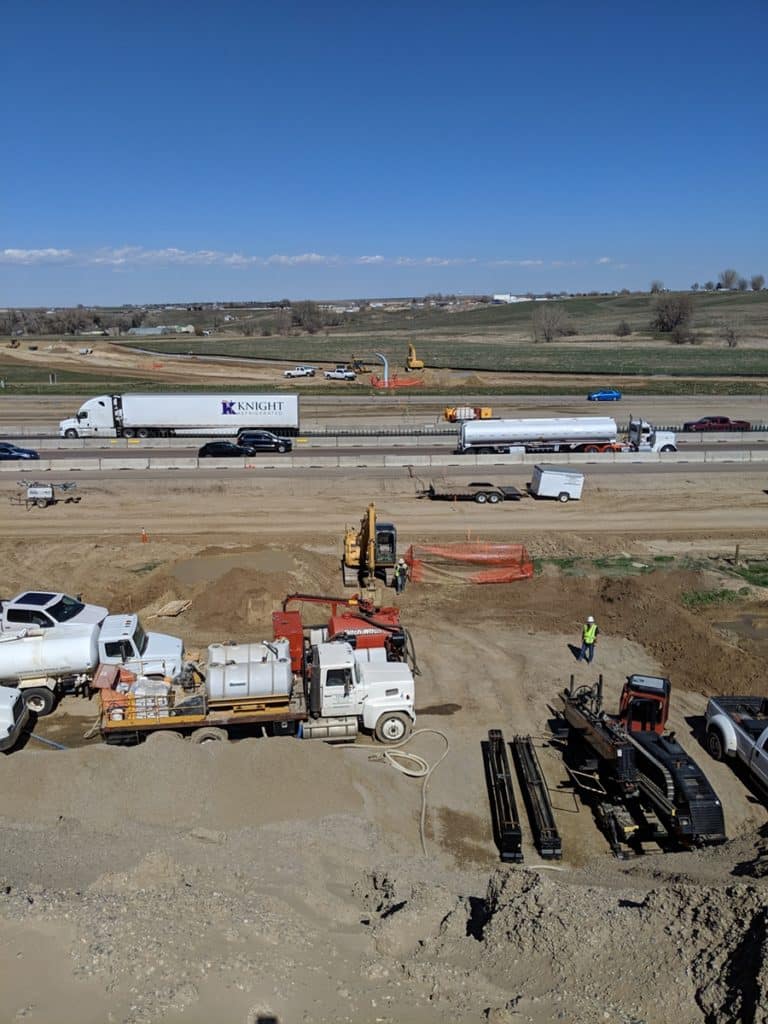
- Minimal Surface Impact: Our boring operations leave driveways, roads, landscaping, and existing infrastructure intact, keeping your site clean and your neighbors undisturbed.
What is Directional Boring?
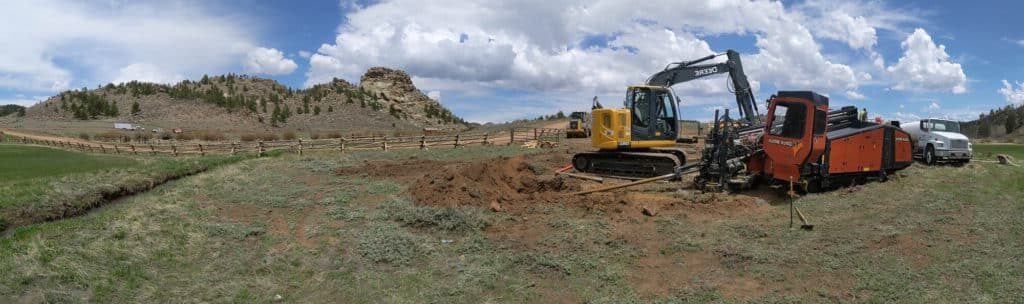
Horizontal directional drilling, commonly called directional boring, is a trenchless method of installing underground utilities without the need for open excavation along the entire utility path. A bore machine drills a precise pilot hole along a planned underground path, reams it to the required diameter, then pulls the product pipe back through, leaving only small entry and exit points at the surface.
Directional boring is often assumed to cost more than open-cut excavation, but open excavation under a road carries costs that add up fast: saw cutting, demolition, haul-off, traffic control, engineered backfill, trench shoring, and full pavement restoration. When those are factored in, boring frequently wins on both cost and schedule. It’s also the preferred solution for crossings beneath rivers, irrigation canals, and railroads, or anywhere surface disturbance isn’t feasible
Temple Construction works with general contractors, municipalities, developers, and energy companies throughout the Front Range. We give you straight guidance so you can make the best decision for your scope and budget.
Frequently Asked Questions
Is directional boring really more expensive than open excavation?
What size pipe can you bore and install?
What types of ground conditions can you work in?
How much surface disruption should we expect?
What utilities can be installed using directional boring?
Let's Get Started